 14974edcbf
* [examples/openspending] - openspending v0.2

* [examples/openspending][m] - fix build

* [examples/openspending][xs] - fix build

* [examples/openspending][xs] - add prebuild step

* [examples/openspending][m] - fix requested by demenech

* [examples/openspending][sm] - remove links + fix bug
87 lines
5.9 KiB
Markdown
87 lines
5.9 KiB
Markdown
---
|
|
authors:
|
|
- mark
|
|
redirect_from: /2012/06/IATI-on-OpenSpending/
|
|
title: Aid Data - From XML to Visualisations
|
|
---
|
|
|
|
Are the World Bank and Department for International Development (DfID) spending money on projects in similar sectors and countries? Does all aid to Kenya go the North-East? How much aid in total did India receive last year?
|
|
|
|
Until recently, it was impossible to know. But now, thanks to the International Aid Transparency Initiative (IATI), we've been able to start to answer these questions - making the aid process more transparent, which is crucial for making it more effective.
|
|
|
|
[IATI](http://aidtransparency.net) is a political agreement by the world's major donors - including international banks, private foundations and NGOs - on a common way to publish aid information. It also defines a technical standard for exactly how that information should be published, IATI-XML.
|
|
|
|
So far, 29 donors representing 74% of Official Development Finance (ODF) [have committed to publishing](http://aidtransparency.net/implementation) to IATI. A further [13 donors](http://iatiregistry.org/group) representing 45% of ODF have already published, and 12 NGOs and foundations have published their own data.
|
|
|
|
This post details how we converted each donor's data, using simple scripts and open source tools, from raw XML data in the [IATI Registry](http://iatiregistry.org/) into a consolidated dataset and then, via loading into [OpenSpending](http://openspending.org/) to visualisations like those shown above and an easy-to-use RESTful API.
|
|
|
|
#### From this....
|
|
|
|
<img alt="" src="http://farm8.staticflickr.com/7086/7242714654_13d481e785.jpg" width="500" height="337" />
|
|
|
|
|
|
#### ... to this.
|
|
|
|
<img alt="" src="http://farm8.staticflickr.com/7092/7242078030_d2240d7c10_z.jpg" title="To this" width="640" height="575" />
|
|
|
|
## Getting the Data Together
|
|
|
|
Full details of how we got the data together are in this case study on OpenSpending ... but to summarize:
|
|
|
|
* We grabbed a list of all the IATI data files via the IATI Registry API (the IATI registry is running [CKAN](http://ckan.org/) so this is very easy)
|
|
* We converted the data to an SQLite database and a simplified CSV format and posted these on the [IATI dataset on the DataHub](http://datahub.io/dataset/iati-registry)
|
|
* Modelled and loaded it into OpenSpending, creating views to visualize it in basic forms.
|
|
|
|
## What you can see
|
|
|
|
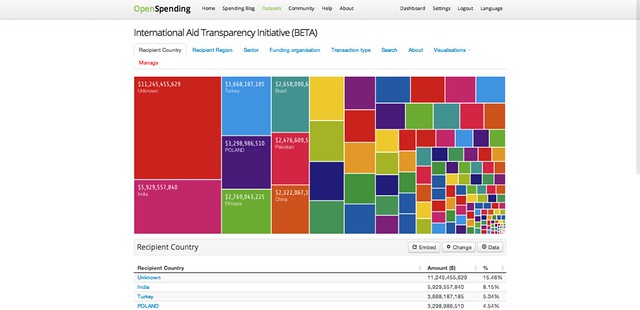
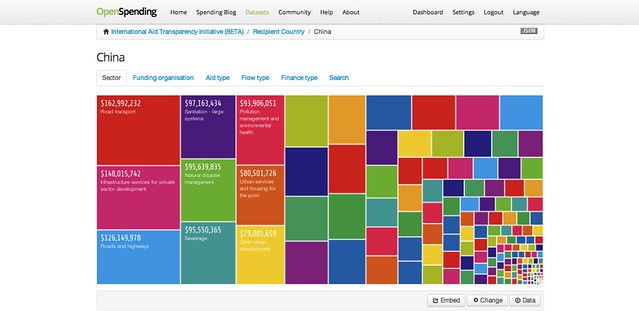
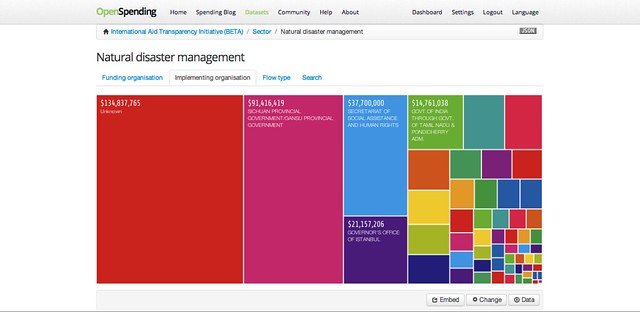
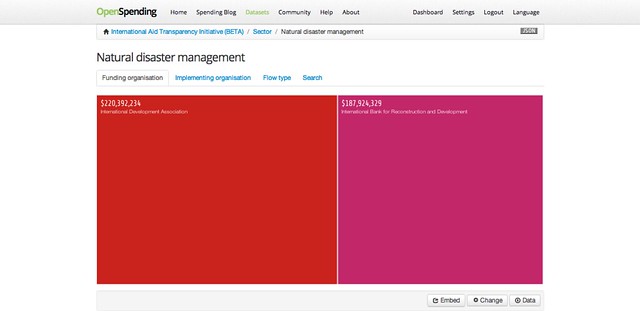
You can now explore the complete dataset of [aid data released so far through IATI, exploring the aggregate and detailed data on OpenSpending](http://openspending.org/iati/). You can drill down through the data and look at it from different perspectives, from exploring the largest sectors in a country, to different implementing organisations in that sector, to looking at all the projects implemented by a single organisation.
|
|
|
|
#### Drill down from one layer...
|
|
|
|
|
|
|
|
#### ... to the next - we're zooming in on China here, breaking down by flow type...
|
|
|
|
|
|
|
|
#### ... and you can switch between breakdowns - slicing data here up by organisations implementing the aid...
|
|
|
|
|
|
|
|
#### ... and here by funding organisation
|
|
|
|
|
|
|
|
## More details
|
|
|
|
We've also just put together a [briefing on how we worked with the IATI data on OpenSpending.org](http://openspending.org/resources/iati/index.html). The briefing covers in depth what IATI is, using the IATI registry, consolidating data into a simple format, loading data into OpenSpending and using the API.
|
|
|
|
## Next steps & get involved.
|
|
|
|
For those keen to put coding knowledge to good use to further the IATI mission, some ideas below:
|
|
|
|
* Use the API - you can use OpenSpending's API to build applications - read the [briefing](http://openspending.org/resources/iati/index.html) for more ideas and instructions
|
|
* [Review our scripts](https://github.com/okfn/iatitools) for converting IATI data. We've been compiling a list of known [issues](https://github.com/okfn/iatitools/issues) with possible future extensions such as geo-coding, reconciling organisations and handling currencies.
|
|
|
|
## What's in the data, what's still to come
|
|
|
|
The dataset contains current and future spending by major aid donors representing 44% of ODF, with disbursement data running up to the current month in some cases. It also contains commitment data up to 2016 from one donor (and from multiple donors up to 2014).
|
|
|
|
However, the data does not contain any information from donors who have not yet published to IATI, and it also does not yet include results, project documents or geo-coded data.
|
|
|
|
Future projects might include:
|
|
|
|
* Validation - to ensure that data is properly formatted and uses standard codelists;
|
|
* Adding results, [geo-coding](http://open.aiddata.org/content/index/geocoding) and project documents to the OpenSpending visualisation - some of this is already available in the original source data, but has not yet been incorporated to this dataset;
|
|
* Other visualisations - for example, a map, and activity and transaction views;
|
|
* Running the dataset compilation automatically - so that it runs on a server nightly, is up-to-date and imports the latest version to OpenSpending as it's updated.
|
|
|
|
## The future
|
|
|
|
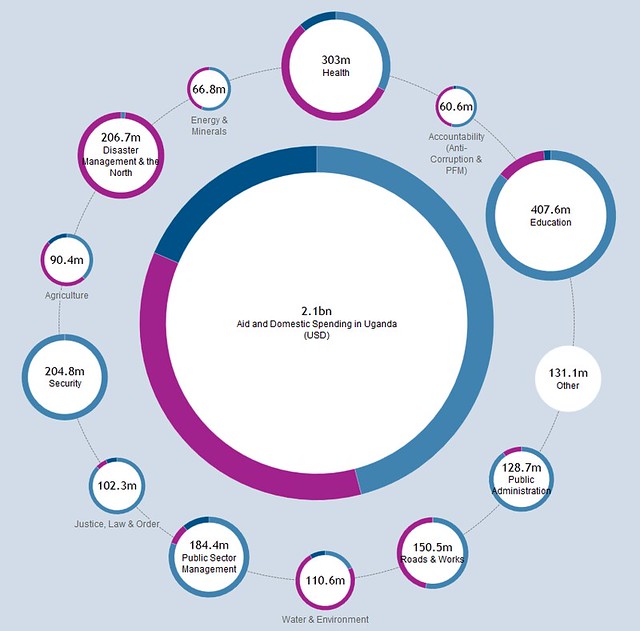
Eventually what we'd like to see is something like this: an integrated dataset of aid and budgets in each country, so that the full picture of resource flows is available.
|
|
|
|
|
|
|
|
**Which country will be next to join up their aid and budgetary flows?** You can get in touch with us via the [mailing list](http://lists.okfn.org/mailman/listinfo/openspending) if you have any questions about this project or the data.
|
|
|
|
This post was written by [Mark Brough](http://okfn.org/members/markbrough). |